Darlene Wiley's pick · Updated November 2026
INIA FLARE 3-in-1 Microcurrent Facial Device Red Light Therapy
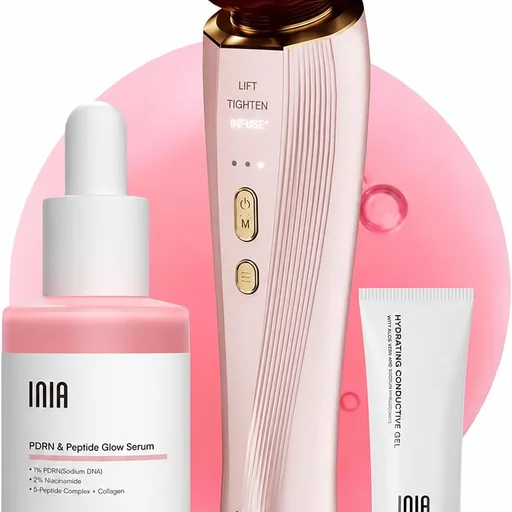

A 3-in-1 facial device like this may appeal to someone who wants one tool that combines microcurrent and red light in a single routine. It also makes sense for a shopper who is comparing at-home devices and wants to think less about category overlap and more about whether the setup, controls, and care routine fit daily life.
The main reason to consider a product like this is convenience. If the listing's claim is accurate, it tries to cover more than one use case without adding another device to the counter or vanity drawer. That can matter for anyone who already has a crowded skin-care routine and wants a simpler step, especially if separate devices would feel like too much effort to maintain. A combined format can also be easier to research than buying each category on its own, because the buyer can compare features in one place and decide whether the device offers enough flexibility to justify the format.
The feature set is the thing to verify closely. With a microcurrent device, it is worth checking what settings it offers, how the conductive step works, whether the treatment heads contact the skin comfortably, and what accessories or gel are required. With red light therapy, the useful questions are different: what wavelengths are listed, how long a session is meant to last, whether the light coverage reaches the areas you care about, and whether the device is designed for face-only use or broader treatment areas. For a 3-in-1 product, the biggest decision point is often not the label itself but whether each function is strong enough to be useful instead of feeling like a compromise.
There is also a practical tradeoff to keep in mind. Multi-function skin-care tools can be appealing on paper, but they depend on a buyer being willing to follow directions closely and keep up with the routine. It is worth checking how easy the device is to clean, how long a session takes, whether the battery or charging setup is convenient, and whether replacement supplies are needed over time. Those details matter more than the headline feature list.
The evidence posture here is simple: there are no usage notes to ground first-hand results, so the sensible approach is to treat this as a category-level recommendation guide rather than a performance claim. The product may be a fit for a shopper who wants to compare a combined microcurrent and red light device against single-purpose alternatives, but the key questions still need to be confirmed from the listing, instructions, and any independent product information.
In the end, this is best for someone who wants to research a compact at-home facial device with multiple functions and is comfortable checking the fine print before buying. It may fit a buyer who values convenience and wants one device to cover more than one step, but only if the details around settings, session time, and day-to-day upkeep line up with how they actually plan to use it.
Some Amazon links are affiliate links. Darlene Wiley may earn a commission from qualifying purchases at no extra cost to you. As an Amazon Associate I earn from qualifying purchases.
See current price